Using a campervan in the UK is very different from touring in warmer climates. Even outside of winter, evenings can turn cold quickly, coastal air brings damp conditions, and condensation becomes part of everyday van life. Many owners start out thinking heating is optional, only to realise after a few chilly trips that comfort and usability drop off sharply without a reliable system in place.
If you are weighing up your campervan heater options, wondering whether to install a diesel heater in your camper, or comparing diesel heater vs gas heater camper setups, this guide breaks it down clearly. We will look at how diesel air heaters from brands such as Autoterm, Webasto and Eberspächer compare to portable gas and electric alternatives, and help you decide what makes sense for UK conditions and the way you actually use your van.
Why Does Heating Matter?
In the UK, heating is not just about staying warm. It is about managing moisture and protecting your interior – as well as your own comfort.
Cold air holds less moisture than warm air. When warm air inside your van meets cold metal panels and glass, condensation forms. Over time, this can lead to damp bedding, musty smells and even long term interior issues.
A proper heating system should:
- Raise and maintain a stable temperature
- Produce dry heat that helps reduce condensation
- Improve air circulation
- Make colder seasons and winter trips genuinely comfortable
If you want your van to be usable beyond high summer, heating becomes part of the overall system design, alongside insulation and ventilation.
Your Options For Campervan Heaters
There are three main routes most owners consider:
- Diesel air heaters
- Portable gas heaters
- Electric heaters
Each has its place, but they perform very differently in real UK conditions.
Diesel Air Heaters
A campervan diesel heater is the most common heater we install.
Brands such as Autoterm, Webasto and Eberspächer are well established in the automotive heating industry. These are compact diesel air heaters designed specifically for vehicles.
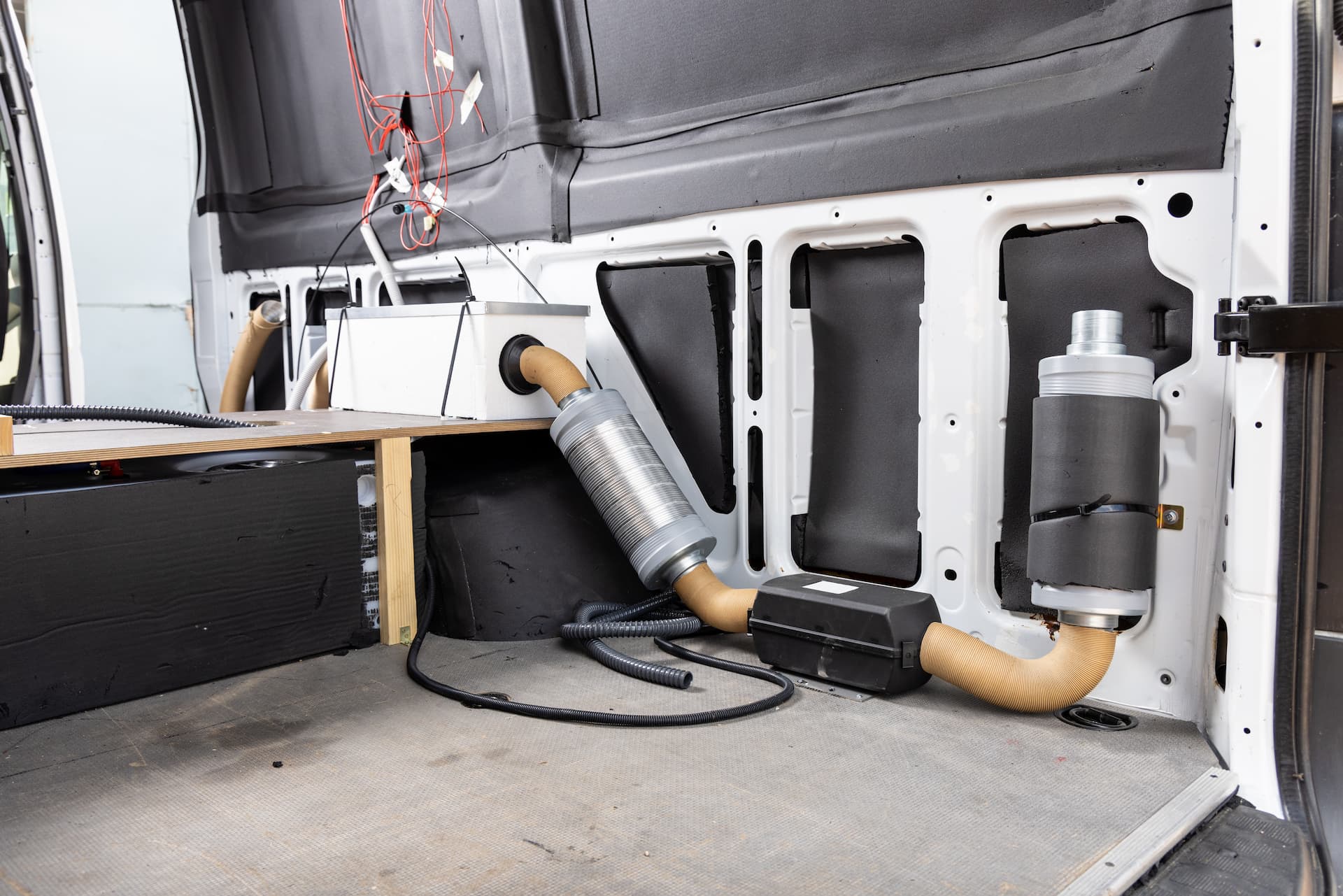
They work by drawing a small amount of diesel from your vehicle’s fuel tank into a sealed combustion chamber. The fuel is burned safely within that chamber, heating air which is then blown into the living space. Exhaust gases are vented outside through a dedicated exhaust system under the van.
They work best for:
- Dry heat output
- Thermostat control
- Low fuel consumption
- Compatibility with 12V heating systems
- Strong off grid performance
Because the combustion process is sealed, no fumes enter the living space. The heat produced is dry, which makes a significant difference in reducing condensation during cold, damp UK nights.
For owners planning off grid trips, winter touring or year round use, diesel heaters are typically the most practical long term solution.
Portable Gas Heaters
Portable gas heaters are often considered because they are relatively inexpensive and widely available. They run from gas canisters and can produce quick warmth in a small space.
However, they burn fuel inside the van. This introduces moisture into the air and requires careful ventilation. Gas safety is critical, and carbon monoxide alarms are essential.
Gas heating systems such as the Truma Combi are more integrated solutions commonly found in larger campervans. These combine space heating and hot water but require a more complex gas installation and additional space, which is not always practical in compact campervans.
For occasional, supervised use, gas heaters can be workable. For overnight heating in smaller vans, they are rarely the most convenient or efficient option.
Electric Heaters
Electric heaters are simple and effective if you are plugged into a campsite hook up. But they often depend entirely on external power. Running an electric heater from a leisure battery alone is generally not viable due to high power draw. Even advanced lithium battery systems will drain quickly under continuous heating loads.
If your travel style revolves around serviced campsites with hook up, electric heating may be sufficient. For remote stays, wild camping or winter touring, it is usually not realistic as a primary solution.

Diesel Heater Vs Gas Heaters For Campervans
When researching a diesel heater vs a gas heater for camper setups, there are several important differences to consider.
Your Personal Health & Safety
Diesel air heaters operate in sealed systems with external exhaust routing. When installed correctly, they provide controlled and safe heating.
Portable gas heaters burn fuel inside the living area and require active ventilation. While safe when used properly, they carry more user responsibility.
Moisture & Condensation
Diesel heaters produce dry heat. This helps reduce condensation on windows and metal surfaces. Gas heaters release water vapour during combustion, increasing internal humidity. In damp UK conditions, dry heat is a significant advantage.
Running Costs
Diesel heaters use small amounts of fuel from your main tank. Consumption is low once the van reaches temperature. Gas systems require separate bottle refills and storage space.
Electric heaters rely on campsite power, which may involve nightly fees. Over time, diesel heaters are generally economical and convenient to run.
Off Grid Uses
For off grid use, diesel heaters integrate directly with your van’s fuel and 12V system. They are designed for vehicle use and sustained operation. Gas and electric systems are more limited in remote scenarios.
How They Perform In The Real World
Comfort is about consistency. A thermostat controlled diesel heater maintains a steady temperature throughout the night. You can wake up to a warm interior rather than a cold, damp space.
Start up draws more power, but once running, electrical consumption is modest. This makes diesel heaters well suited to leisure battery systems and solar setups.
Electric heaters draw high continuous loads. Gas heaters produce heat quickly but do not offer the same fine thermostat control in most portable setups.
In practical terms, a diesel heater often feels like part of the vehicle’s infrastructure rather than a temporary solution.

Installing A Diesel Heater In A Campervan
Many people often consider fitting a heater themselves. While DIY kits are available, installation is more complex than it first appears.
A proper installation involves:
- Tapping into the vehicle’s fuel system safely
- Secure mounting of the heater unit
- Correct intake and exhaust routing beneath the vehicle
- Safe electrical integration into your 12V system
- Careful placement of ducting and thermostat controls
Incorrect exhaust positioning or poor fuel line installation can create safety risks. Professional installation ensures the system is secure, compliant and fully integrated with the rest of your campervan conversion.
In a well designed build, the heater is neatly integrated into cabinetry, ducting is discreet and the system feels purpose built rather than retrofitted.
Do You Actually Need A Diesel Heater?
It depends on how you use your van. If you travel only in peak summer and stay on serviced sites with hook up, you may not need one. If you travel in spring and autumn, explore coastal areas, head to Dartmoor or take spontaneous trips without guaranteed hook up, heating becomes far more important.
If you plan winter touring, ski trips or extended off grid stays, a diesel heater is close to essential for comfort and practicality. UK weather is not just cold, it is damp. Managing moisture as well as temperature is key to maintaining comfort and protecting your interior.
For many owners, fitting a campervan diesel heater is the upgrade that transforms a seasonal van into a genuinely year round vehicle.
Contact Templer Way Campers
If you are planning a new build or upgrading your existing camper, speak to a specialist at Templer Way Campers. We can help ensure the setup you choose genuinely supports the way you travel, not just the way you imagine using the van.