

When it comes to designing a campervan, layout and storage are what make or break the experience. You can have the best materials, the smartest electrics, and all the right features, but if the layout does not work, the van quickly becomes frustrating to live in.
Whether you are working with a compact van or a larger base vehicle, getting the right balance between usable space, storage, and comfort is what turns a van into something you actually want to spend time in. This guide covers practical campervan storage ideas and real world layout options that work, helping you understand what is possible and what to consider when planning your build.
How Does The Size Of Your Van Affect Layout?
The starting point for any van conversion layout is the size of the vehicle. Smaller vans like the Volkswagen Transporter naturally require more efficient use of space, while larger vans such as the Ford Transit or Mercedes Sprinter give you more flexibility but still need careful planning.
Compact Or Short Wheel Base Vans
In a smaller van, like the Ford Transit Custom SWB, or the VW Transporter, every decision matters. Storage often needs to be built into seating areas, beds, and overhead spaces. You are working within tighter constraints, so layouts need to be multi functional. This is where things like under seat storage, overhead lockers, and fold away campervan furniture become essential rather than optional.
Larger Longer Wheel Base Vans
With larger vans, like a VW Crafter, Mercedes Sprinter, or Ford Transit LWB, you gain more room to separate living, sleeping, and storage areas. That might mean a fixed bed with a garage underneath, or more generous kitchen space. But more space does not automatically mean a better layout. Without proper planning, larger vans can end up with wasted space or awkward flow between areas.
The key difference is that compact vans demand efficiency, while larger vans demand balance.
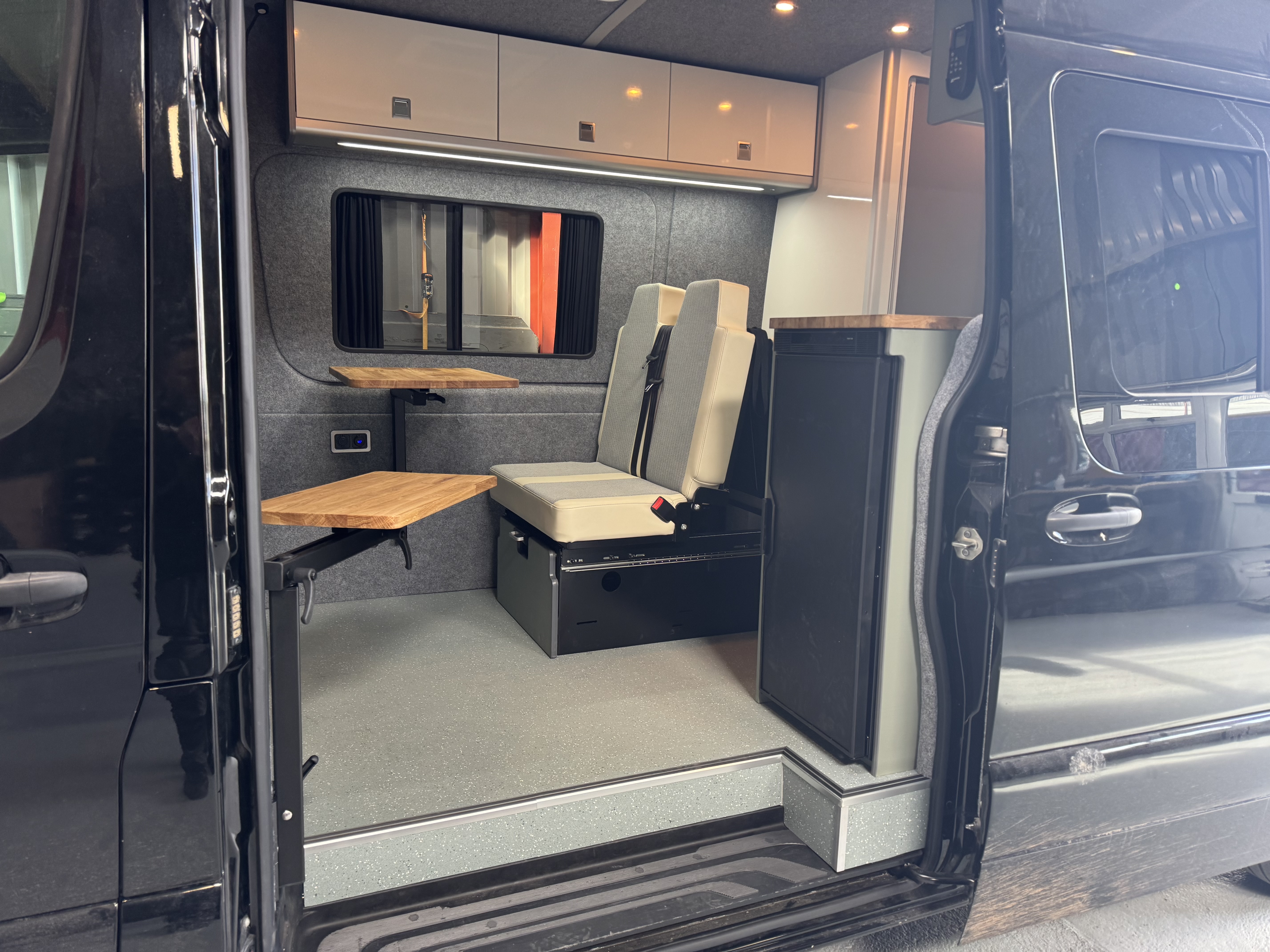
Campervan Layout Ideas That Actually Work
There is no single best campervan interior idea, but there are a few proven layouts that consistently work well depending on how the van is used.
Standard Side Kitchen Layout
This is one of the most popular van conversion layouts, particularly in Volkswagen Transporter builds. A side kitchen unit runs along one wall, with a rock and roll or RIB style bed opposite.
It is a layout that strikes a good balance between seating, sleeping, and storage. You still get usable floor space, and there is room for overhead lockers and under bed storage without the van feeling cramped.
Slimline Layout
A slimline layout reduces the width of the furniture unit to allow for a wider bed. This is ideal if sleeping comfort is a priority, especially for two people.
The trade off is reduced side storage, but this is often offset by increased under bed storage space. It is a good example of how layout decisions directly affect storage strategy.
U Shaped Rear Lounge Layout
A U shaped layout transforms the rear of the van into a lounge area that converts into a large bed. This works particularly well for couples or people prioritising comfort over carrying passengers.
Storage is built into the seating, with plenty of under seat space, and often additional overhead lockers. It creates a more open, social space, especially when parked up.
If you’re interested in how these campervan layouts look, or want to explore what it might cost, visit our conversion packages, or pricelist. If you’ve got any questions, you can contact one of our team.

Practical Campervan Storage Ideas
Good storage is not about cramming as much as possible into a van. It is about making space usable and easy to access.
Overhead Lockers
Overhead lockers are one of the most effective ways to add storage without taking up floor space. Positioned above the kitchen or seating area, they are ideal for lighter items like clothing, food, and daily essentials.
Well designed overhead lockers also integrate lighting, which helps make the space feel less enclosed.
Under Seat Storage
Seating areas are often the most underutilised spaces in a van. Building storage into bench seats or bed bases gives you hidden space without impacting the layout.
This works particularly well in both side kitchen layouts and U shaped designs.
Under Bed Storage
In both compact and larger vans, under bed storage is one of the most valuable areas. With the right setup, you can store everything from camping equipment to luggage without cluttering the living space.
Some bed systems are specifically designed to improve access, allowing you to fold or lift sections to load larger items.
Campervan Wardrobe Units
A campervan wardrobe unit might seem like a luxury, but in reality, it is one of the most practical additions for longer trips. Even a compact wardrobe space helps keep clothing organised and prevents the van from feeling messy.
In smaller vans, these are often integrated into existing furniture rather than being standalone units.
Sliding Door Storage
The sliding door area is another overlooked opportunity. Adding slim storage compartments here can provide easy access to frequently used items without interfering with the main layout.
Modular Storage Options
Modular pods and removable storage units give you flexibility. They allow you to adapt the van depending on the trip, whether that is adding more storage for longer journeys or freeing up space for day to day use.

Why Materials & Build Quality Matter More Than You Think
It is easy to focus on layout and forget about the materials behind it, but build quality plays a big role in how usable and long lasting the van is.
CNC cut furniture ensures everything fits properly, which makes a noticeable difference in both durability and finish. It also helps maximise space, as components can be designed to fit precisely rather than relying on standard sizes.
Materials like Vohringer ply are commonly used in higher end builds because they are lightweight but strong, which is important when managing overall vehicle weight.
Finishes such as marine carpet are not just aesthetic. They improve insulation, reduce noise, and make the van feel more comfortable to live in.
These details do not always stand out at first, but they have a big impact over time.
What You Should Actually Consider In Your Campervan Layout Design
A good layout is not just about how it looks. It needs to work day to day.
Weight distribution is a key factor. Heavy items like batteries, water tanks, and kitchens need to be positioned carefully to keep the van stable and safe to drive.
Accessibility is just as important. Storage that is difficult to reach or requires moving multiple things quickly becomes frustrating. The best campervan storage ideas are the ones you can actually use without thinking about them.
There is also the balance between storage and living space. It is tempting to maximise storage, but too much built in furniture can make a van feel cramped. The best layouts find the middle ground, giving you enough storage without sacrificing comfort.
Start Planning Your Ideal Campervan
If you are in the early stages of planning your campervan, focusing on layout and storage is the best place to start. Getting these right will shape everything else, from how comfortable the van feels to how easy it is to live with.
If you are not sure what layout would work best for your needs, or you want to explore different options in more detail, it is always worth speaking to someone with hands on experience.
If you are based in Devon or the South West and looking to build a campervan that is designed properly from the start, get in touch with Templer Way Campers to discuss your ideas and see what is possible.


